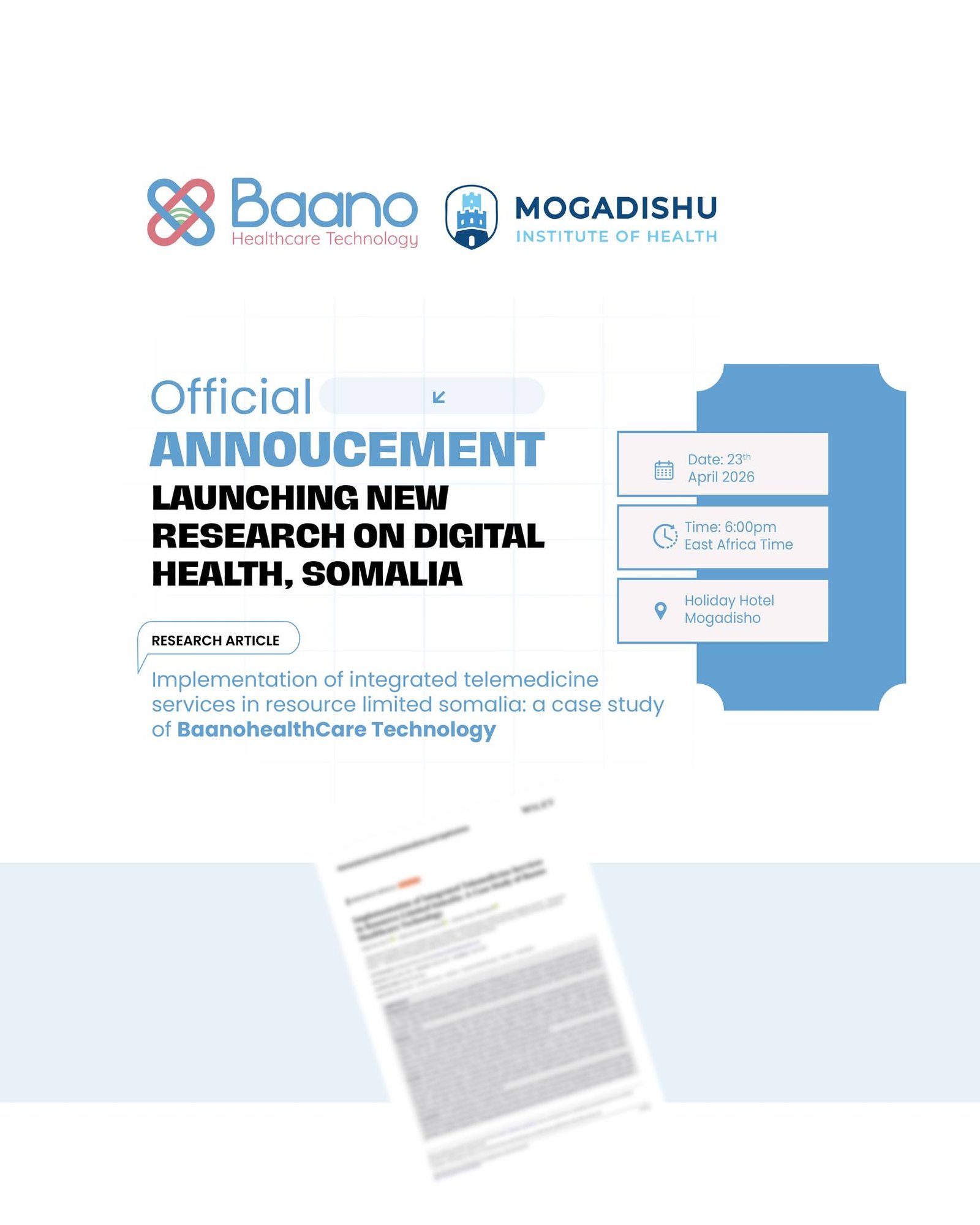
Published in: International Journal of Telemedicine and Applications (Wiley)
Lead Author: Dr. Najib Isse Dirie, MD, Ph.D. (Managing Director, MIH)
Abstract
Somalia’s healthcare system faces significant challenges due to limited infrastructure and physician density (2.5 per 10,000 population). Telemedicine is a promising solution, particularly given the country’s mobile phone penetration rate of 54%. This study evaluated the implementation and impact of Baano Healthcare Technology’s integrated telemedicine platform in Somalia, while also situating its utilization within the broader disparities in healthcare access, internet coverage, and socio-economic context.
Methods: A descriptive quantitative analysis of operational data from Baano Healthcare Technology telemedicine services was conducted between July and October 2024. These services were delivered through an integrated digital platform that linked video consultations, hospital bookings, and interactive voice response self-management services within a single telemedicine system.
Results: The analysis examined 610 users of video consultation and hospital booking services, along with 157,660 interactive voice response system interactions. Key findings included:
- 63.44% of users aged 1–30 years with balanced sex distribution (50.82% male, 49.18% female)
- Hospital bookings constituted 73.61% of services; online consultations 26.39%
- Banadir region accounted for 80.49% of all users
- Dental services were the most requested specialty (42.98%)
- IVR system substantially used for chronic condition management (47%), with diabetes management being the most frequently accessed topic (23%)
Conclusion: The implementation of integrated telemedicine services in Somalia demonstrates promising potential for expanding healthcare access, particularly in urban areas. However, its reach remains constrained by geographic and digital divides, with rural areas facing compounded barriers of poverty, provider scarcity, and low internet use. The platform’s success in urban areas provides a model for expansion, although addressing infrastructure limitations and regulatory frameworks remains important.
Impact & Significance
This groundbreaking research, led by the Mogadishu Institute of Health (www.mih.so), provides critical evidence of telemedicine’s transformative potential in resource-limited settings. The findings underscore MIH’s commitment to advancing Somali-led research that drives real healthcare innovation and policy change.
📧 For research inquiries: info@mih.so